ICE Collision Gelnhausen: Alarm System Failure Under Scrutiny Following Near Miss
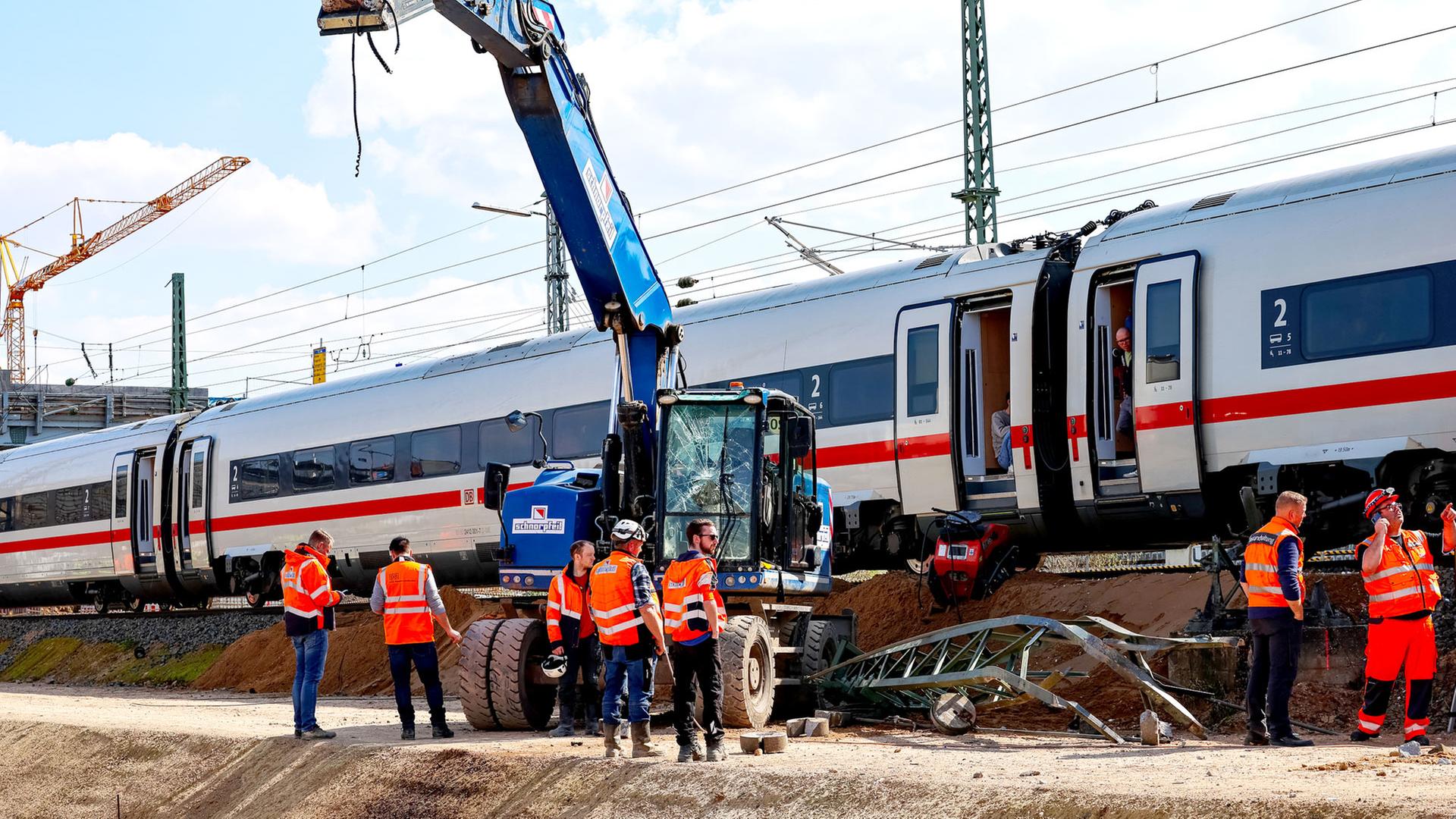
A recent high-speed train incident near Gelnhausen sent shockwaves through Germany's rail network, prompting a thorough investigation into a reported alarm system failure. On a Monday morning, an ICE train collided with the grab arm of an excavator, leading to significant disruptions and raising serious questions about safety protocols in railway construction zones. While the good news is that no passengers were seriously injured, the incident underscores the critical importance of robust safety measures and the reliability of warning systems.
The collision, which occurred on the vital Fulda-Frankfurt am Main railway line, left hundreds of passengers stranded and caused extensive delays across several key long-distance routes. As the dust settles and repairs are completed, the focus has squarely shifted to understanding why a crucial alarm, designed to prevent such a scenario, reportedly failed to activate.
The Day of the Collision: A Near Catastrophe in Gelnhausen
The incident unfolded around 10:00 AM on Monday, March 24, 2026, when ICE 71, carrying approximately 650 passengers en route from Hamburg to Basel, was traversing a section of track near Gelnhausen where preparatory construction work was underway. According to passenger accounts, the train was already traveling at a reduced speed due to the nearby worksite when it suddenly braked sharply. A strong jolt followed, signaling that the ICE had struck something. That 'something' turned out to be the extended grab arm of an excavator, which had encroached onto the active railway line.
Miraculously, none of the passengers on board the ICE sustained injuries, a testament to the safety features of modern high-speed trains and perhaps the reduced speed at the point of impact. The excavator driver, however, was not as fortunate, suffering a light head injury and requiring hospitalization. The incident quickly triggered a massive response, with emergency services converging on the scene. Passengers faced hours of anxious waiting before a replacement train could be arranged to continue their journey. The immediate aftermath also saw significant damage to the railway infrastructure, including a defunct overhead line that needed urgent repair and extensive inspections of the trackbed for any structural compromise. You can read more about the line's re-opening in our article: Gelnhausen ICE Crash: Fulda-Frankfurt Rail Line Reopens.
Unraveling the Mystery: Alarm System Failure Under the Microscope
The most alarming revelation to emerge from the aftermath of the ICE Unfall Gelnhausen is the claim by construction site employees that a vital alarm system failed to activate. This system is specifically designed to warn workers and equipment operators of approaching trains, acting as a crucial safety net in potentially hazardous work environments adjacent to active rail lines. If these claims prove true, it represents a grave breach in established safety protocols and raises profound questions about the integrity of operational safety measures.
The Federal Police are leading the investigation into the cause of the collision, with their focus heavily centered on evaluating technical data. Initial findings were anticipated by the end of the week, which will shed more light on the sequence of events and, crucially, the performance of the warning systems. An alarm system failure in such a scenario is particularly concerning because it bypasses a fundamental layer of protection. Railway work sites are inherently dangerous, and robust, redundant warning systems are non-negotiable. Without a reliable alert, the risk of human error or mechanical oversight escalating into a catastrophic event increases exponentially. Investigators will need to determine whether the alleged failure was due to technical malfunction, improper setup, human error in monitoring, or a combination of factors. Understanding this root cause is paramount to implementing preventative measures and restoring confidence in railway safety.
Ripple Effects: Disruptions and the Path to Recovery
The immediate consequence of the ICE Unfall Gelnhausen was the complete closure of the highly trafficked Fulda-Frankfurt am Main railway line. This shutdown was necessary not only for the removal of the damaged excavator and the stranded ICE but also for extensive repair work. Experts were dispatched to tackle the severely damaged overhead line, which had to be de-energized and earthed to ensure the safety of personnel. Simultaneously, comprehensive examinations of the trackbed were undertaken to detect any subtle damages that could compromise future train operations.
The closure resulted in widespread disruptions across Germany's long-distance rail network. Travelers experienced significant delays, often exceeding 45 minutes, and numerous cancellations. Key ICE routes connecting Frankfurt/Main to major cities such as Hamburg, Berlin (via Wolfsburg/Braunschweig and Erfurt), and Leipzig/Dresden were severely affected. Thousands of passengers faced inconveniences, missed connections, and altered travel plans. The logistical challenge for Deutsche Bahn was immense, necessitating diversions and replacement services where possible. Fortunately, by Tuesday afternoon, around 5:15 PM, following the completion of intensive repair and inspection work, the line was officially reopened. Regional and long-distance services resumed their regular schedule, bringing an end to the frustrating diversions and delays for passengers. For more on how the travel network was affected, see our related article: Digger Incident: Gelnhausen ICE Crash Caused Major Delays.
Enhancing Rail Safety: Lessons from Gelnhausen
The ICE Unfall Gelnhausen serves as a stark reminder that even with advanced technology and strict regulations, vigilance in railway safety can never be relaxed. The alleged alarm system failure highlights the critical need for continuous evaluation and enhancement of safety protocols, especially in environments where heavy machinery operates in close proximity to active rail lines.
Key Insights and Preventative Measures:
- Redundant Warning Systems: Relying on a single point of failure is risky. Future safety strategies should prioritize multi-layered warning systems, combining automated alerts with human oversight (e.g., dedicated flagmen, communication systems) to ensure no single failure leads to a catastrophic event.
- Advanced Geofencing Technology: Implementing GPS-based geofencing systems that automatically detect when construction equipment enters a predefined exclusion zone near a track and trigger immediate warnings to both operators and train dispatchers.
- Enhanced Communication Protocols: Strict, clear, and real-time communication channels between railway operators, train drivers, and construction site management are paramount. Regular briefings and immediate reporting of any anomalies are essential.
- Regular Equipment and System Audits: Beyond routine checks, unannounced audits of safety equipment, warning systems, and operational procedures on construction sites can help identify potential weaknesses before an incident occurs.
- Training and Compliance: Ensuring all personnel, from equipment operators to site supervisors, are not only thoroughly trained in safety protocols but also strictly adhere to them. Emphasizing the consequences of non-compliance can reinforce best practices.
- "Safe by Design" Principles: Where possible, designing construction plans to maximize separation between work zones and active lines, and implementing temporary barriers or speed restrictions as standard practice.
Given that preparatory work for a two-week full track closure was already underway at the Gelnhausen site, this incident will undoubtedly influence future planning and safety measures for such extensive projects. It underscores the immense complexity and inherent risks involved in maintaining and upgrading critical railway infrastructure.
The Gelnhausen ICE collision, while fortunately resulting in only minor injuries, has brought the vital issue of rail safety to the forefront. The ongoing investigation into the alleged alarm system failure is critical, as its findings will shape future safety standards and operational procedures for railway construction sites across the country. Learning from this incident is not just about avoiding future accidents, but about continuously striving for an impeccably safe and reliable rail network. It's a commitment that Deutsche Bahn, investigators, and contractors must uphold to ensure public trust and the continued efficiency of Germany's impressive railway system.